Lilla Lovász - From Journalism to Conservation Ecology

Updated: Oct 9
How to have an impact and translate research into concrete measures

Lilla Lovász has had several lives already. She was a pilot, a journalist, and is now a resourceful ecologist. She has worked with birds, plants, insects, cattle, whales and horses in Hungary, France, Switzerland, Mozambique, Iceland and Denmark. Always with a new ambitious project in mind, she travels across Europe collecting data on the field, teaching and supervising students, discussing and sharing ideas and results… she does not get bored.
She is now leading two Conservation Ecology projects on rewilding and environmental restoration, using horses as nature engineers. As I have the chance to work with her on one of these projects, she is the first portrait I am drawing in this blog. Together we discussed her early interest in nature, the joys and challenges of academic life, and how to have a positive impact on the environment, both in your professional and personal life.
Here is an overview of Lilla's two current research projects:
The HERDWISE project
HERbivore social structures Driving reWIlding and Supporting Ecosystem recovery: linking social behaviour, biodiversity and ecological education
How social behaviour of different large herbivore groups can influence the environment they live in.
The project is funded by the Hempel Foundation and conducted in the framework of a postdoctoral research project in the research group of Prof. Dr. Jens-Christian Svenning, ECONOVO - Center for Ecological Dynamics in a Novel Biosphere, Department of Biology, Aarhus University.

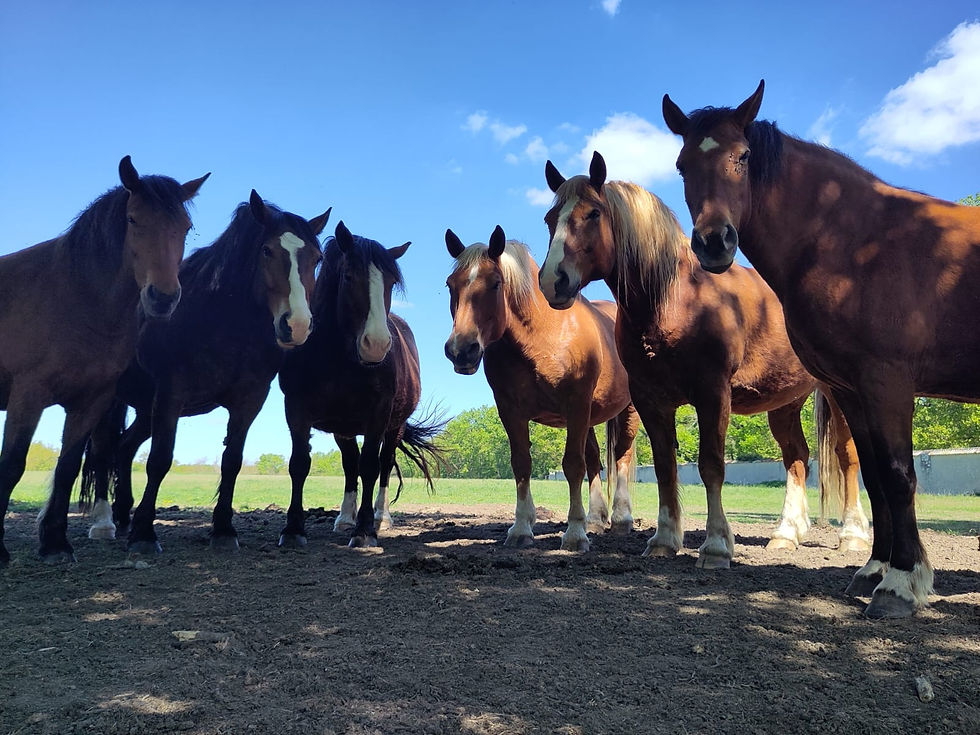
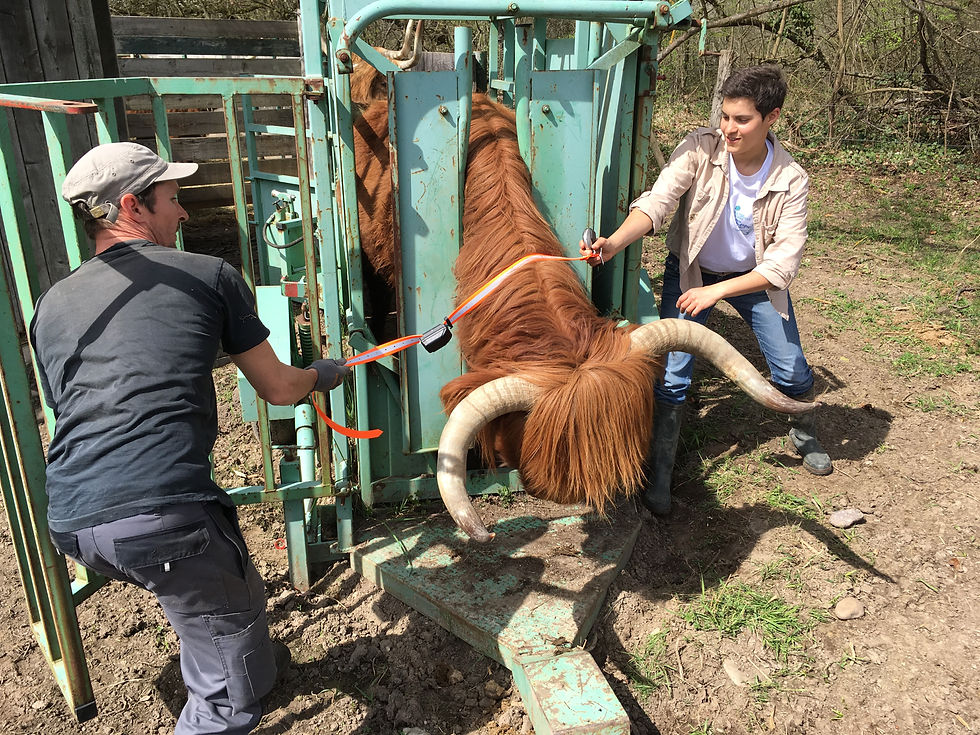
Large herbivores, such as horses and cattle, are ecosystem engineers, which means that because of their presence, how they eat, behave and move around in their environment, they maintain a diversity of habitats and promote a diversity of species. For example, they open clearings in closed forests or create bare-ground spots on grasslands, making space for a range of species with different habitat needs. As rewilding is gaining more and more importance as a means of ecosystem restoration and nature protection, horses become one of the most important actor of these initiatives. But horses have been historically managed by humans in different kinds of social groups, and nature conservation, even rewilding, often applies such traditional management. Horse groups are often fully controlled; for example, keeping only mares or geldings (castrated males) together is widespread in husbandry and in conservation grazing. Rarely, horses are in more natural groups, such as family groups: a stallion and several mares and their offspring, and bachelor groups: young mature males. This social organization likely influences how they engineer their environment because they eat, behave and move around differently depending on who they live with – for example, a mare that has a foal and is lactating, most likely needs different, more nutritious food, then those conspecifics without offspring – just like us, humans!
Do more natural social groups, living in family groups, interact more or differently with their environment?
Will their presence lead to an increase or a change in habitat quality compared to more managed horse groups?
This is what the HERDWISE project is investigating. To do it, Lilla and her colleagues are collecting data on many different horse groups in Denmark. They use satellite images to characterize habitat heterogeneity where the animals live, they put GPS collars on them to see how they move around; they film them with drones to see how their interact; and they cut hairs from their tails to tell what they’ve been eating… these horses are reality-show stars!
The ultimate goal of the project is to inform conservation strategies about best practices: for instance, to have natural social horse groups instead of managed ones in certain types of habitats because these groups increase the quality of these habitats. In this sense the project combines fundamental with applied research!

The SustEquine project
Sustainable Equine management through ecosystem restoration
Could today's horses partly take on the ecological role of the large herbivores that once shaped our landscapes?
The project is funded by the Sandgrueb Stiftung and conducted in the framework of a postdoctoral research project in the research group of Prof. Dr. Clara Zemp, Conservation Biology Laboratory, Institute of Biology, University of Neuchâtel.
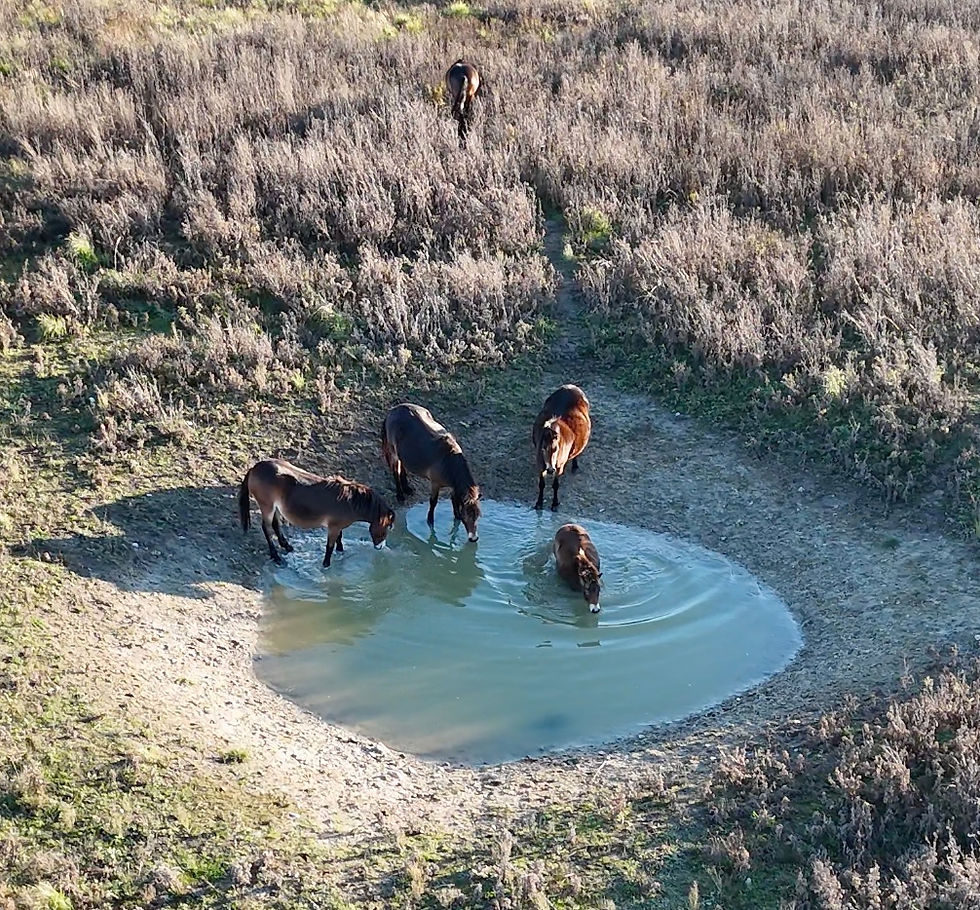
As biodiversity is declining at an alarming rate, the SustEquine project aims at using horse farms to restore some of this biodiversity. As we’ve seen in the HERDWISE project, horses are ecosystem engineers. This means that they modify their environment in ways that influence numerous other species. They interact continuously with the landscapes they inhabit. Through grazing, trampling, seed dispersal and nutrient cycling, they shape vegetation and create a mosaic of habitats that many other species depend upon. Traditionally, horse management has focused primarily on animal health, nutrition and welfare. But it has not considered their role as ecosystem engineers. Wild horses have fulfilled this role for thousands of years, on nearly all continents. Today, domestic horses occupy millions of hectares across Europe, representing a considerable ecological potential.
Instead of viewing horse farms solely as places where horses are kept, the SustEquine project explores whether they can also become valuable refuges for biodiversity. It investigates how horse management can be adapted to support both biodiversity and horse welfare, through healthy, natural ecosystems.
In this project, Lilla first developed a restoration potential index that included habitat quality, to pinpoint where restoration efforts could be most effective. She basically walked around every square meter of the farms and beyond, measuring everything she could measure, from plant and bird species to management (grass mowed, grazed by horses or not, surrounding habitats, etc.).
This year, she and her colleague (that’s me!) are measuring a biodiversity snapshot, collecting data about birds, butterflies and other arthropods, because they represent inhabitants of different habitats.
Next, she wants to propose management changes and track biodiversity evolution: Does changing the way we manage horse farms lead to more biodiversity? Do they improve the welfare of horses?
The goal of this project is to go towards a new vision of horse keeping, where we control the environment – and horses – less, and where horses become part of a functioning ecosystem. Horse welfare and nature conservation mutually benefit each other.

You can check out Lilla's scientific publications here, and follow her on LinkedIn.
Personal story and career
How did you first get interested in biology ?
The natural world was always super interesting to me: all those fascinating animals, their secret lives, and what they do when we don’t see them. I loved everything that was hidden in the sea, especially whales and dolphins. I remember my sign in kindergarten was a dolphin! I’m lucky to have spent my childhood summers at the Croatian seaside, which was then still Yugoslavia. I was running up and down on the rocks barefoot. I don’t know how I did it, today it is very painful on those very sharp rocks! Watching crabs creeping or hiding in the cavities of the rocks catching prey was so exciting. I would put my finger in the tentacles of sea-anemones hanging from the rocks – I remember the fizzy feeling as they grabbed my finger. Then came the Balkan wars, and all this got washed off all of a sudden; we had to move to Hungary from the warzone.
But I think this early childhood experience imprinted in me and played a role in taking the decision later, as a career-changer, to pursue Biology. But I didn’t think I would ever be a scientist. I wanted to be someone who does what she likes, not stuck in a room with a computer. It turned out that being a scientist is mostly that… but so far, I managed to combine it with outdoor work. I feel it’s important to experience what I write down in an article on my own skin. I would like my students to go through the same experience, so they can relate and enjoy real-life experience, not only work with data.

What image did you have of research and science as a kid or student ? How did you imagine a researcher’s life ?
As a kid, I don’t think I cared at all. I didn’t realize there was such a thing as science when I was about five. The only vision of science I had was through cartoons: an old person, usually a man, with glasses and grey hair, in his white lab coat, doing some strange things in a lab. Who as kid would want to be such a person? I didn’t. I was busy being outside. My most important memories are from my grandmother’s house where I was catching frogs in the nearby canal, looking at what bugs and butterflies do on the flowers, while lying in the grass.
When I was around eight years old, I got a microscope. It was a new interesting tool, and I could explore things. But then I guess I got bored. I can see that in my half-brothers now: the older one is eight years old, he just got a telescope and got super excited about it, but it didn’t last long. It’s a telescope for kids, so you don’t actually see the stars with it… I think we could do a lot more to involve kids in science today..
As a kid I was really annoyed when people were asking me what I wanted to do when I grow up. I would tell them “What? Leave me alone I don’t know! I want to be a pilot!” And then I was actually a pilot for a bit. A glider pilot. But then it turned out to be rather a sport for rich men, which I was not. I was a teenager then, and I still didn’t know what I wanted to be. Certainly not a rich person who doesn’t like what they do.

What was your professional path ?
I studied communication and English teaching at university in Hungary. I never got to be a teacher but I got hired right after the university as a journalist and technical editor at a daily newspaper. My favourite was covering nature- or just any outdoor topic. But of course, most topics were about political events. When I wanted to establish a column with news about natural sciences, the editor-in-chief said that ‘nobody is interested in nature, and even less in science’. Then, the newspaper’s German owner started hiring interns and proposed to us who had been working there for almost a decade to work for the same salary as the interns. The owner would call our work filling up the space between the advertisements, because the advertisements bring the big money, not what we wrote or photographed.
So I went back to university to do a Bachelor in Biology, still in Hungary, when I was thirty. I didn’t have to play the old one because I look younger than I am, so I could fit in with the group and go back to the same age level. We had a really great team, so even though I was working on the side and didn’t have any time left for myself, it was super fun.
After that I did a Master and a PhD in Ecology in Switzerland and France, where I started to conduct projects in conservation ecology and rewilding.
Have you had mentors or inspirational people along the way ?
I feel lucky I had great professors. I owe them the knowledge I have now in ecology by grounding the strong bases. My Bachelor’s supervisor was József Gyurácz, an ornithologist and great ecologist. Although I started with spiders, with another supervisor, I couldn’t carry on because of the toxic personality of this person. Luckily, I could get out of this early on, and I could start over with professor Gyurácz. Toxic supervision is quite a taboo in academia, but I think it remains a major barrier for scientists.
Luckily, I had more positive than negative mentors. Still from the same university, professor Csaba Szinetár was extremely passionate about transmitting his naturalist point of view. He would get excited about all species, showing us the beauty of creatures we would have not thought about. He would go along the Slovenian seaside promenade in the night with a UV lamp in the hand, point at each scorpion sitting on the warm wall – and they gloomed green! We were like kids looking at a magician. He really looked like one! Those were probably the best days during my studies. We had a lot of field trips and courses across our training, which I think is essential to build your knowledge as an ecologist or biologist. I feel this is not valued so much today, so I’m happy to have been a Bachelor’s student 15 years ago, and I try to do as much field-based teaching today as my options allow.
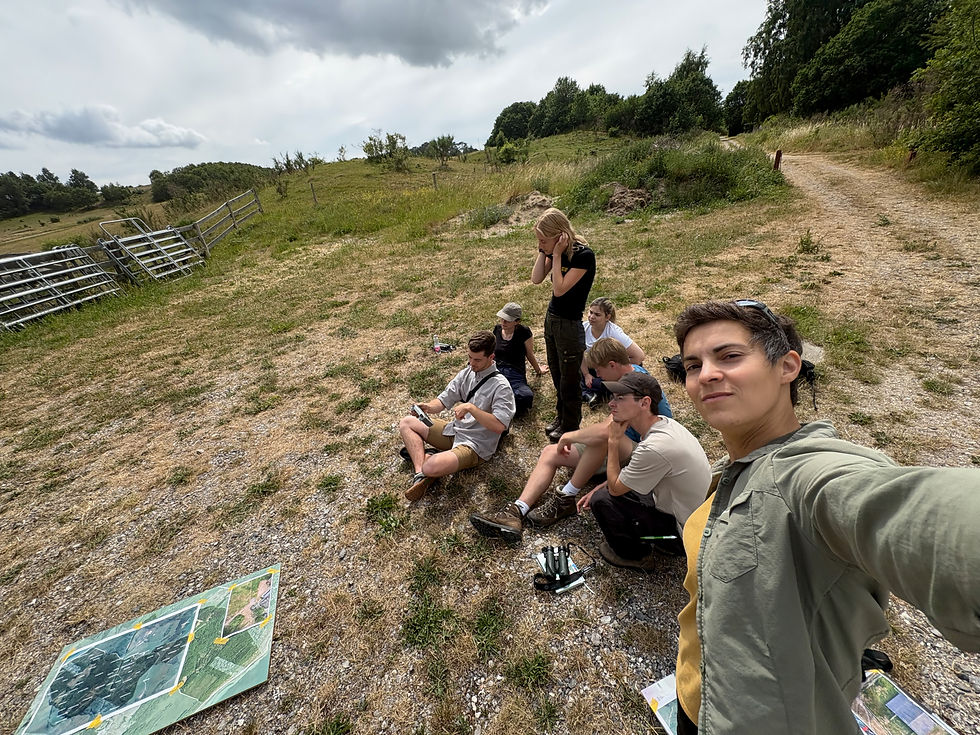
One more professor who gave me unforgettable experience was botanist Attila J. Kovács, aka Kokó. He was already an emeritus professor, but he was so active and motivated to fill our young heads. Everyone became excited about plants and their Latin names; it was a fashion to learn, not an obligation! I became a fan of plants determination myself, a new world opened up for me. Kokó was taking us everywhere: from lowland grasslands in Hungary to the Austrian Alps, but especially in Romania, in the Carpathian mountains, from where he was. He had an extreme fast walking pace. Imagine a class of 20 students running after a 70-year-old man, who’s determining every second plant species and still much faster than all of us. Going uphill and never getting tired. We would often get lost, and call him on the phone. I’m not so old, it was already the era of mobile phones… He would tell us “just go, continue from where I left you, you will find a nice patch of Polygala major, there take right, you have to find this beautiful Ophrys apifera, there turn left, continue until your feet are wet and I’ll be there in the Eriophorum meadow”. That was his way of teaching us to notice and recognize plants species. Today it’s much easier with AI apps. But I’m glad I learned this knowledge the way I did, I think it got deeply anchored into my brain. Today we use AI support because of the lack of time – and I have no good solution to avoid it. But I wish at least early education could turn back to more traditional methods, like species determination from books on the field.
Did you come across bumps or barriers related to gender, origin, personal life, academic system or colleagues ?
After the PhD I looked for a non-academic job in Switzerland for several years, without any luck. I wanted to have a faster, more concrete impact on environmental issues by doing more hands-on conservation. It seems that being non-Swiss, over-qualified for such jobs, having a Hungarian name and born in Yugoslavia drastically decreased my chances. But I don’t regret not having been employed, but rather having received funding for my own research projects. I now think that I can be more efficient in having an influence on environmental issues through being a researcher. I can base on my own results what I’m suggesting to conservation practice, and this makes the suggestions genuine. If even a little bit of what I am doing can help keep (or recreate) the natural world as natural as possible, then this is what I want to go for.
Still, language seems to be a strong barrier to science communication and policy influence. I never managed to be involved in boards of local policy and conservation organisations in Switzerland, even though I’ve become quite good in at least one of the official Swiss language, French – but no foreign language can be my mother tongue, and this seem to be an issue.
I wish our modern societies could be more inclusive on this matter.
Your researcher’s life/job
What is the most challenging part of your research ?
A substantial part of my work is to communicate research results to conservation practitioners, site and animal managers. I want to convey the idea that we should try to reduce our footprint, to give more space to the environment and the species around us. I would like us – me included – to be less selfish, and consequently change old management habits that, in my opinion, wield too much control over wildlife. Rewilding ecologists have been demonstrating this idea over and over again, but it is still difficult to translate this research into practical outcomes, especially because it involves political changes.
What is the most interesting part of your research ?
In general, my projects are super interesting (of course! – I figured them out). But nature restoration and conservation is also essential to our planet today, so working at the intersection of conservation and behavioural ecology, as well as practical conservation is, by default, interesting. More specifically, experiencing ecosystem processes through animal behaviour in real-time is the most exciting thing to me. As I’m answering this question, I’m filming rewilded horses with a drone. I feel like I am looking into their secret lives without them realizing, and I find it very powerful – today, humans influence so much of the world that wildlife can hardly exist without disturbance. Finding ways to observe and quantify natural (and undisturbed) behaviour to be able to establish baselines to argue for less human disturbance and influence is, I think, essential.
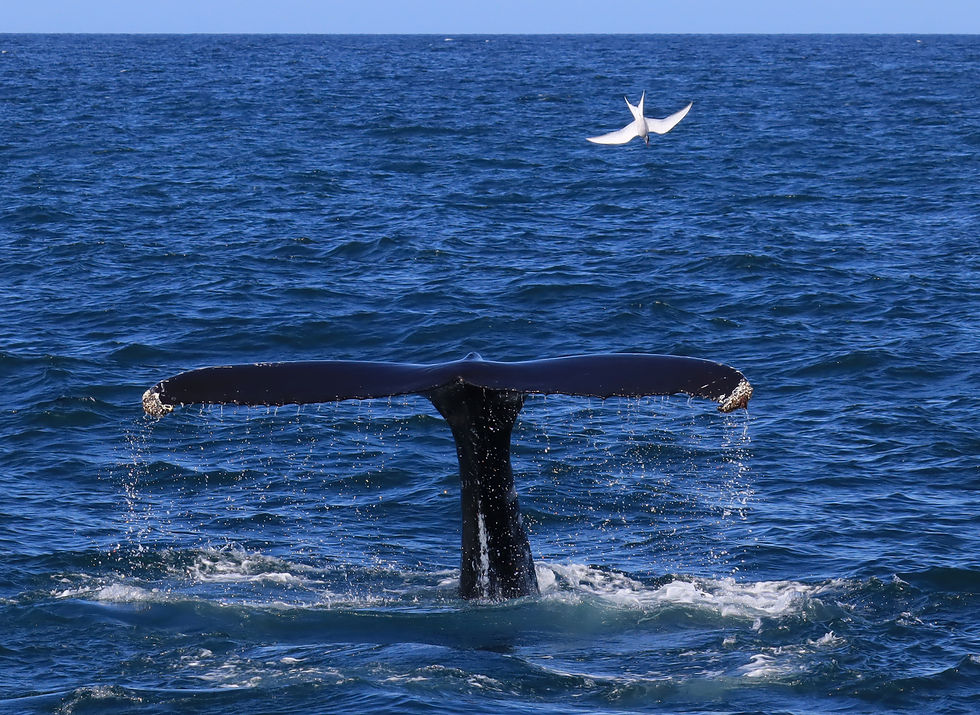
Then, being on the field always makes me realize just how much we still don’t know, and I can’t stop thinking about research questions that have never been investigated. Of course, because funding and time are limited, I end up throwing away 90% of my ideas, but it’s nevertheless fun to think about them. One idea I feel really sorry not be able to work on, is a topic on whales as ecosystem engineers by their behaviour. I even received funding for it, but it coincided with the two other fundings I got for my current rewilding behavioural ecology and ecosystem restoration works. Leading two projects in parallel is difficult – three would have been impossible.
What is the most boring part of your research ?
Definitely the administration. We live in a super digitalized world, and instead of simplification, things become overly complex. Ten years ago, to get my field costs reimbursed, I would just fill in a physical paper with a physical pen, hand it to the “physical” secretary along with my receipts – in three days I would get my money back. Today, everything must be done electronically and there are many more steps to the process, which of course differ in different institutions, so every affiliation has its own state-of-the-art complications. Then there is the administrative part of student supervision. I supervise international students in two different countries, Denmark and Switzerland. For each student, I have ten to fifteen different documents to read, understand, fill out, sign, get signatures from other people, explain to them what these documents are about, and so on. Of course, some administration is necessary. But the time spent working myself through all these labyrinths, I would much rather spend with the students or on the research itself.
What is the most frustrating part of your academic life ?
Getting papers I have worked on for years rejected by journals. I feel like the peer-review process is solely based on luck sometimes. Journals have a very low acceptance rate, it can be very difficult to find reviewers, reviewers can allocate only very little (volunteer) time to their review, and you often end up getting a generally positive review and a generally negative one for the same manuscript which often leads to rejection. Additionally, the publishing process is very time-consuming, and it is often extremely difficult to get important papers out quickly. As I am at a stage of my career where I not only supervise projects but also still conduct my own, including primary data collection and field work, I find it nearly impossible to be productive enough with publishing.
What would you change in the academic system ?
I think, research assessment is not yet fair in academia. There are many great initiatives, such as the Coalition For Advancing Research Assessment (CoARA), that promote evaluating overall output and not only published papers. But it seems still difficult to consider the value of less visible contributions, such as teaching and supervision (especially when you’re supervising as a postdoc, ‘unofficially’), into which you invest a lot of time and energy, or non-written science communication, such as discussions with nature managers, which represent an essential part of my work.

Another thing is putting more emphasis on field-based learning. I used to organize a two-day field trip for Master students of Basel and Strasbourg universities in a nature reserve in France, where I did my PhD. It turned out that for most students this was their first active experience in the field. To me, fieldwork should be offered to students much earlier during their education. Unfortunately, I am under the impression that such courses are less valued in our AI-era than 15 years ago. In some countries like Denmark, field education is back on the agenda, that’s fantastic. I would like to see this happening elsewhere.
How do you conciliate your work/life balance ?
At the moment, I can rather talk about work-work balance.
But I do believe that my research in ecosystem restoration and rewilding can have a positive impact on the planet’s future. On the other hand, even when I take a few days off, it’s often just the scenery behind my laptop that changes. I’m lucky to have a husband who also finds the work I do imporant and supports me, although sometimes even he complains seeing the back of my laptop more than my face! But I’m not alone with this, most of my postdoc colleagues talk about similar work-life imbalance. This is something we should improve, building a less time-constrained, less stressful scientific culture.
A question I often ask myself, whether there would be any other way to more directly help create a nature-inclusive future. I have two half-brothers – small kids, very curious about nature. Would it be more meaningful to spend more time with them to transmit the knowledge that was transmitted to me when I was a kid, which led to a research career in ecology? The approach of living with, and not against nature. Instead, now they have a big sister somewhere in the other part of Europe.
Then I realize, without the journey from my grandmother’s garden in war-beaten Yugoslavia to one of the most fantastic research groups in Denmark, I would not necessarily have the experience to transmit. I still think, it is through being a researcher I can be most helpful both on a direct and indirect level in helping creating a future where also nature has a place, with functioning ecosystems including animals that are allowed to live in natural distributions and act with natural behaviour.

Are you interested in Lilla's research? Visit the ECONOVO website from the University of Aarhus and the Conservation Biology Lab website from the University of Neuchâtel.
You can contact Lilla directly here: lilla.lovasz@bio.au.dk or here: lilla.lovasz@unine.ch
Comments